
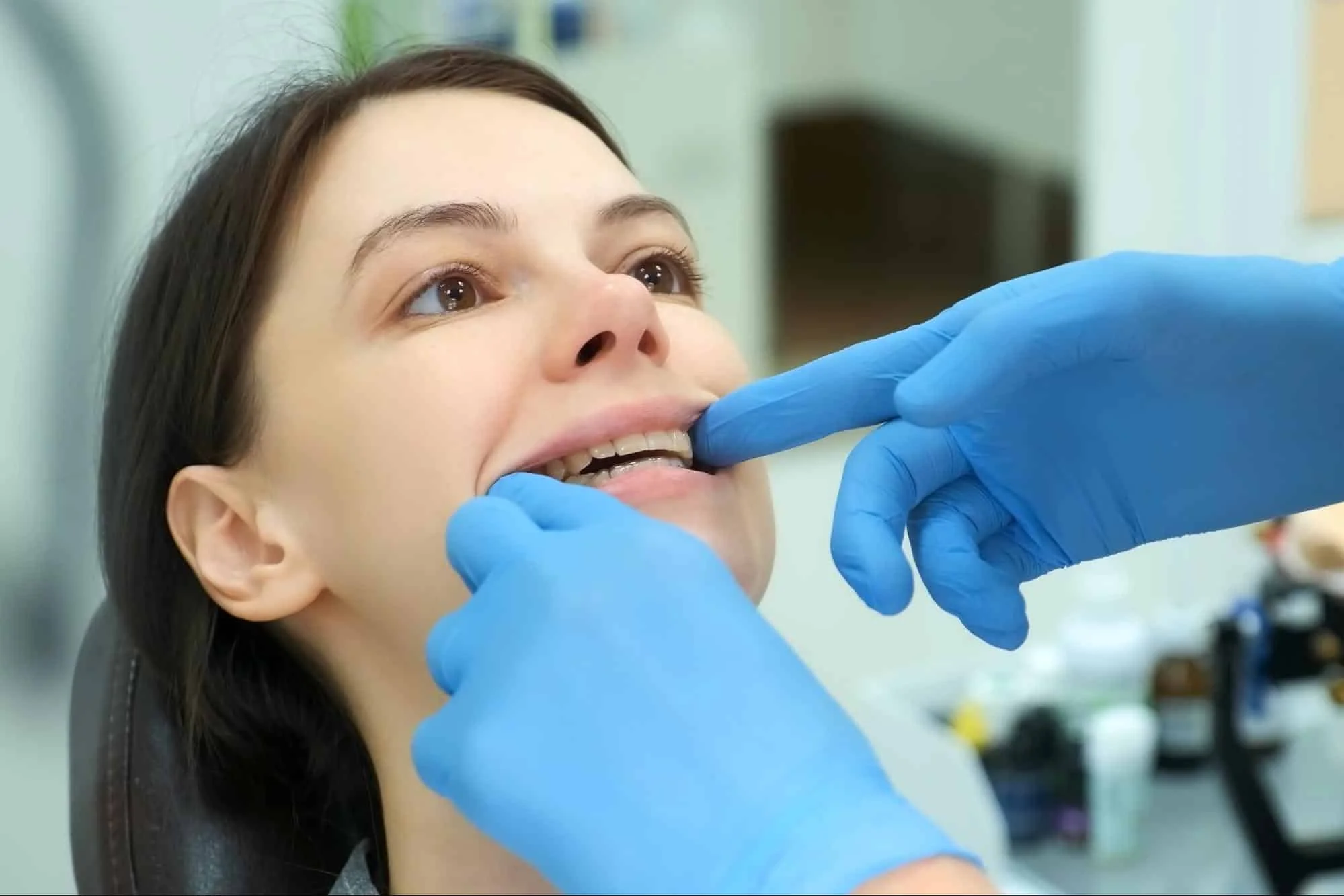
This is one of the first questions people ask, and it has two separate answers. The first is about daily wear: how many hours per day does Invisalign actually need to be in your mouth to work? The second is about overall treatment length: how long until you are done? Both matter, and both are more straightforward than the online noise around them suggests. If you are exploring Invisalign and wondering how long you have to wear Invisalign to see real results, here is the direct answer. And if you are already searching for Invisalign in Manhattan, NY, Goodman Orthodontics has been the answer for patients here since 1999.
Daily Wear: The 20 to 22 Hour Rule
The answer to how long you have to wear Invisalign each day is 20 to 22 hours. That number is not a guideline with room for interpretation. It is the clinical threshold below which the aligners stop doing what they are designed to do.
Teeth move under sustained, consistent pressure. When the aligner is out, that pressure stops, and teeth begin to drift back toward their original position. Two or three hours less per day may not feel significant, but over weeks it compounds. Trays start fitting tight when they should fit easily. Progress stalls. Treatment extends.
Here is what 20 to 22 hours actually looks like in a real day:
| Activity | Aligners In or Out? |
|---|---|
| Sleeping | In |
| Working, commuting, daily life | In |
| Meals (breakfast, lunch, dinner) | Out |
| Brushing and flossing | Out |
| Coffee, tea, anything except cold water | Out |
| Everything else | In |
Run the math and you will notice that three meals plus oral hygiene already accounts for most of the two-hour window. That is by design. Aligners come out to eat and to clean your teeth, then go straight back in. That is the entire routine.
The honest truth about compliance: Invisalign only works as consistently as the patient wears it. Unlike braces, there is no fixed hardware forcing movement. The discipline to keep aligners in is the treatment. This is not unique to Invisalign, it is just more transparent.
Overall Treatment Length: What to Expect
Clinical research shows that average Invisalign treatment spans 12 to 18 months for mild to moderate issues like crowding or spacing, extending to 18 to 24 months for more complex cases. Here is how that breaks down in practice:
| Case Type | Typical Duration | Example Conditions |
| Mild | 6 to 12 months | Minor spacing, slight crowding |
| Mild to moderate | 12 to 18 months | Crowding, spacing, minor bite issues |
| Moderate to complex | 18 to 24 months | Significant bite correction, larger movements |
| With refinements | Add 1 to 3 months | Fine-tuning at the end of the main series |
These ranges assume consistent 20 to 22 hour daily wear. Each month of less-than-required wear typically adds time to the overall treatment. The patients who finish on schedule are almost always the ones who treated the wear requirement as non-negotiable.
Adults vs. Teens: Does Age Affect the Timeline?

Adult teeth have stopped growing, which means tooth movement can be planned and executed with high precision. Invisalign for adults often tracks closely to the projected timeline when compliance is solid. The tradeoff is that adult bone is denser, which can mean slightly slower movement in some cases.
For teenagers, Invisalign Teen includes compliance indicators built into each tray so parents can verify wear time. It also includes replacement aligners for lost or damaged trays. The biology of adolescent jaw growth can sometimes work in a teenager’s favor, but variable compliance is the most common reason teen cases run longer than projected. The differences between adult and teen Invisalign go beyond just the hardware.
For younger children showing early jaw development concerns, Invisalign First addresses arch width and bite issues at an age when growth is still an advantage. This is typically a phase one treatment with a separate phase later.
What Happens After the Last Aligner?

Finishing the final tray does not mean the work is done. Teeth have a natural tendency to drift back toward their original positions, sometimes aggressively, especially in the months right after treatment. Retainers are not optional. They are what turns a completed Invisalign case into a permanent result.
Most patients wear retainers full time for the first few months post-treatment, then transition to nights only. The specific protocol depends on the case and the doctor’s recommendation. Skipping retainers is the most common reason people end up back in treatment years later.
Questions About Invisalign in Manhattan, NY?
Dr. Adam Goodman has been providing Invisalign in Manhattan, NY since 1999, making him the most experienced Invisalign practitioner in New York City. If you are considering Invisalign and want a realistic picture of your specific timeline, a free consultation at Goodman Orthodontics is the right starting point.
Riverdale, Bronx, NY
Address: 3515 Henry Hudson Pkwy Apt 2D, Bronx, NY 10463
New Patients: (929) 203-0315
Current Patients: (718) 543-4300
Email: riverdale@goodortho.com
Manhattan, NY
Address: 440 E 57th St #1a, New York, NY 10022
New Patients: (929) 595-7927
Current Patients: (212) 688-4663
Email: info@goodortho.com
Book Your Free Invisalign Consultation at Goodman Orthodontics
Frequently Asked Questions
What happens if I wear Invisalign less than 22 hours a day?
Teeth drift back when aligners are out. Missing a few hours occasionally is manageable. Making it a habit adds weeks or months to your overall treatment and may require refinement trays to correct what did not track as planned.
Can I take Invisalign out for a special event?
Yes. Removability is one of the genuine advantages over braces. Taking them out for a dinner, presentation, or event is fine as long as the weekly average stays at or above 20 to 22 hours per day.
Why do new aligners feel tight?
Tightness when switching to a new tray means it is working. Each set is designed to move teeth slightly beyond where the previous tray left them. The pressure typically eases within a day or two as your teeth adjust.
Do I really have to wear retainers after Invisalign?
Yes. Retainers are what make the result permanent. Teeth without retention drift over time, and drifting after Invisalign is not slower than after braces. Most patients transition to nights-only retainer wear after the first few months.
How do I know if Invisalign is right for me?
A consultation with Dr. Goodman is the only reliable way to know. He will assess your case, tell you whether Invisalign or another treatment will produce the best result, and give you a projected timeline. Goodman Orthodontics offers free in-person consultations at both the Manhattan, NY and Bronx locations.